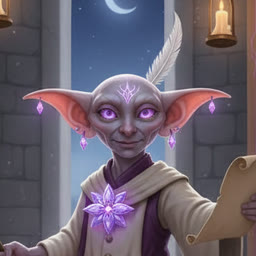
Defence Against the Dark Arts notes
25 notes on Dark creatures, curses, counter-curses and how to defend yourself, written for wizarding-school roleplay. Each one has a teaching tip for professors.
Search, filter and quiz these notes
Defence Against the Dark Arts teaches students to protect themselves from Dark creatures, curses and those who use them.
- It is a core class, taken by every student for their first five years.
- Younger years study Dark creatures and simple defensive spells.
- Older years study curses, counter-curses and harder protective magic.
- Lessons are practical. Expect to face the thing you are learning about.
“Wands out. You will not learn this from a book.”
Teaching tip: Open the term by asking what students are most afraid of meeting. Use the answers to choose which creatures to cover first.
The Dark Arts are magic used mainly to harm, control or kill.
- Curses are the best-known kind, and the worst of them are against the law.
- What makes magic Dark is mostly what it is meant to do.
- Dark magic often leaves a lasting mark on its victim, and on the one who casts it.
- Students learn how the Dark Arts work in order to defend against them, not to use them.
Teaching tip: Ask whether a spell can be Dark if nobody is hurt. Let students argue before you give the classroom answer.
A Dark witch or wizard is one who uses the Dark Arts on others.
- They are far more dangerous than any creature, because they can think and plan.
- The Ministry trains Aurors to track them down.
- A student who meets one should not fight. Get away and fetch a professor.
- Most start small. Nobody sets out to become one.
Teaching tip: Keep villains human. Ask students what might lead an ordinary person to the Dark Arts, and what could have stopped them.
A counter-spell stops or undoes another spell. A counter-jinx answers a jinx, and a counter-curse answers a curse.
- The general counter-spell ends many simple spells. Try it first.
- Stronger curses need their own counter-curse, and you have to know which curse it was.
- Some curses have no counter at all.
- Acting quickly matters. Many jinxes get worse the longer they are left.
Teaching tip: Jinx a classroom object, then have students say what they would try first, second and third to stop it.
The charm that defeats a Boggart. It forces the Boggart into a shape you find funny.
- Picture the funny version clearly before you cast.
- The spell alone is not enough. Laughter is what finishes a Boggart.
- Face one in a group if you can. With several people in front of it, it cannot decide what to become.
“Riddikulus!”
Teaching tip: Have each student say what their Boggart becomes and how they make it funny. Let anyone pass who does not want to share a fear.
Also on: Spells
A small, dwarf-like creature that lives wherever blood has been spilled, such as old battlefields and dungeons.
- It attacks people who wander alone at night, and tries to club them.
- It is easily driven off with charms and hexes.
- It is most dangerous to someone who is lost and on their own.
Teaching tip: Set a scene in a ruined keep at dusk. Students who stay together should come to no harm. Students who wander off should not.
Also on: Creatures
A small, one-legged creature that seems to be made of wisps of smoke. It carries a lantern.
- It lures travellers off the path and into bogs.
- It looks frail and harmless, which is the danger.
- If you see a light bobbing over a marsh at night, do not follow it.
“*points at the light over the marsh* We are not going that way.”
Teaching tip: Narrate a walk across a marsh at night. Students who follow the light end up knee-deep in the bog.
Also on: Creatures
A Japanese water demon that looks like a scaly monkey with webbed hands. It lives in shallow ponds and rivers.
- The hollow in the top of its head holds water, which gives it its strength.
- Trick it into bowing. The water spills out and it becomes weak.
- It grabs people who wade into its water.
Teaching tip: Ask students how manners could save their life. The one who remembers to bow gets the points.
Also on: Creatures
A dead body made to move by a Dark wizard's spell. It is not alive and has no will of its own.
- It does whatever the wizard who made it commands.
- It is not a ghost. A ghost is the imprint of a soul. An Inferius is a puppet.
- It fears light and warmth, so fire drives it back.
- The plural is Inferi.
Teaching tip: Use it to teach the difference between a ghost and an Inferius. Students should be able to explain it in one sentence.
Also on: Creatures
A huge, slow-witted creature, up to twelve feet tall, known for its strength and its smell.
- There are mountain, forest and river trolls.
- Most carry a club and swing it at anything that moves.
- A troll is easy to confuse and very hard to hurt.
- Students should never try to fight one. Fetch a professor.
Teaching tip: Ask students to outwit one, not outfight it. Reward any plan that uses the troll's own stupidity.
Also on: Creatures
A marsh creature that looks like a piece of dead wood until it moves.
- It has finned paws and very sharp teeth.
- It glides through the marsh and bites at the ankles of people walking through.
- It is fond of eating Mandrakes, which makes it a pest to growers.
Teaching tip: Have students cross a marsh in character and describe where they put their feet. Anyone who steps on a log should think again.
Also on: Creatures
A rare creature that looks like a black cloak, about half an inch thick, gliding along the ground at night.
- It smothers people while they sleep.
- It is found only in hot, tropical places.
- The Patronus Charm is the only spell known to drive it off.
- It has the Ministry's highest danger rating.
Teaching tip: Use it to show why the Patronus Charm matters beyond Dementors. Ask what a student could do who cannot yet cast one.
Also on: Creatures
A Patronus comes in two strengths: a silver mist, or a full guardian in the shape of an animal.
- The mist is called non-corporeal, or incorporeal. It is the weaker of the two.
- The animal is called corporeal, and it can drive a Dementor away.
- You do not choose the animal.
- The charm is very advanced magic, beyond what most students ever learn.
- It only works if you hold on to a truly happy memory.
Teaching tip: Most students should manage silver mist at best. Praise an honest wisp over an unlikely stag.
Dark detectors are magical objects that warn when something untrustworthy is near.
- A Sneakoscope looks like a spinning top. It lights up, spins and whistles.
- A Secrecy Sensor quivers when it picks up lies or something hidden.
- A Foe-Glass is a mirror that shows your enemies, more clearly the closer they come.
- They can be fooled, so treat them as a warning and nothing more.
Teaching tip: Give one student a Sneakoscope that goes off during the lesson. The class works out why, in character.
A cursed object has had a curse laid on it, and harms whoever touches, wears or uses it.
- It usually looks ordinary, or even valuable.
- Never pick up something unknown in a ruin, a tomb or a shady shop.
- A curse on an object can last for centuries.
- If you find one, leave it where it is and tell a professor.
“If you do not know what it is, do not touch it.”
Teaching tip: Place a mystery object on your desk and say nothing. See who reaches for it, then teach the rule.
A curse-breaker finds and removes curses, often on old tombs, vaults and treasure.
- The wizarding bank employs them to bring back gold from cursed places.
- The work takes patience, a steady nerve and strong counter-curses.
- It often means travel to far-off places.
- It is a common ambition for students who are good at this class.
Teaching tip: A good careers prompt: students say what kind of person would be good at the job, and whether their character would want it.
The first lesson of defence is knowing when not to fight.
- If a creature or a wizard is beyond you, get away and fetch help.
- Stay with your group. Most Dark creatures pick off people on their own.
- Send up red sparks if you are in trouble and cannot move.
- Nobody is marked down for coming back safe.
“*grabs her friend's sleeve* We are leaving. Now.”
Teaching tip: Run a scenario where the right answer is to leave. Give points to the student who says so first.
In a Defence scene, let the professor play the creature and write only what your own character does.
- Describe the fear as well as the spell. A character who is never afraid is dull.
- Let some of your spells miss.
- Check out of character before a scene that plays on someone's real fears.
- Do not kill or capture a creature that the professor is running. Leave the ending to them.
Teaching tip: Tell the class before the scene what the creature can and cannot do. Then keep to it.
Also on: RP Tips
Spells are grouped by what they do and by how much harm they mean.
- A charm adds or changes a property: making something float, glow or lock.
- A jinx is a minor nuisance, meant to annoy.
- A hex is nastier and can hurt.
- A curse is the worst kind, meant to do real damage.
Teaching tip: Read out a list of spells and have the class sort them into the four kinds. Expect arguments about the ones in the middle.
Also on: Spells
A small, green water creature with long fingers that grabs at passing swimmers.
- Lives in lakes and ponds.
- Its fingers are brittle, so a firm response can free you.
Teaching tip: Ask students how a calm response differs from panic when something grabs your ankle in water.
Also on: Creatures
A shape-shifter that turns into whatever the person in front of it fears most.
- Lives in dark, closed spaces like wardrobes.
- Beaten with the charm Riddikulus and, above all, laughter.
Teaching tip: Safe practice scene: each student names something mildly silly to fear, then invents a funny form to turn it into. Keep real fears out of it.
Also on: Creatures
Cloaked beings that drain happiness and guard the wizard prison Azkaban.
- Driven off with the Patronus Charm.
- Chocolate helps afterwards.
Teaching tip: Keep it light and supportive. Students list ways their characters would help a friend recover afterward, such as warmth, food and company.
Also on: Creatures
The Shield Charm. Blocks or turns back minor spells.
Teaching tip: Pair it with Expelliarmus in a drill. Partners alternate attack and defense, and the defender narrates how the shield held.
Also on: Spells, Dueling
The Patronus Charm. Creates a silver guardian that drives off Dementors.
- Powered by a strong happy memory.
- A full Patronus takes the form of an animal.
Teaching tip: Have students describe a happy memory in one sentence and the animal form it might take. Keep memories low-stakes and optional.
Also on: Spells
Three curses that are illegal to use on another person: one controls, one tortures, one kills.
- Using any of them can mean a life sentence in Azkaban.
- Students learn about them in Defence Against the Dark Arts, they do not cast them.
Teaching tip: Discussion only, no casting in scenes. Ask why a society makes some magic illegal, and what the school teaches about spotting and reporting it.
Also on: Spells